What Causes a Garage Door to Move on Its Own?
Could a Blocked or Misaligned Safety Sensor Be the Cause?
Yes, a sensor problem is the single most common reason a door reverses, refuses to close, or seems to act on its own. Every garage door opener has a pair of photo-eye sensors low on each side of the track. If something blocks their line of sight, if they have drifted out of alignment, or if the lenses are dusty, the opener reads that as an obstruction and reverses the door or refuses to close it at all, even with nothing in the way.
This is also the first thing our technicians check during a garage door repair call, because it is quick to rule in or out and involves no risk to check yourself. Clear anything near the sensor brackets and wipe both lenses with a soft cloth before assuming the problem is bigger than it is.
These sensors are not just good engineering, they are federal law. After the U.S. Consumer Product Safety Commission mandated entrapment-protection sensors on every residential opener built after 1993, following dozens of reported child entrapment deaths, a working sensor stopped being optional.
Can a Worn-Out Spring Make the Door Move Without Warning?
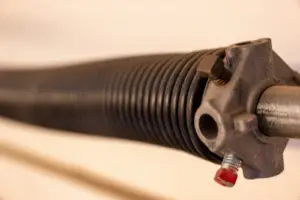
Yes, a spring that has lost tension can let a door drift open on its own or make the opener strain hard enough to trip a safety cutoff, which can look like the door “closing by itself” partway through. Torsion and extension springs typically last around 7 to 10 years, and the heat here in the Las Vegas Valley tends to shorten that window by drying out the coil’s lubrication faster than in milder climates.
A door that hangs crooked, moves unevenly, or has gotten noticeably louder is showing early signs of an unbalanced spring. Because these springs operate under high tension, this is not a repair to attempt without training. If you notice any of these signs, a garage door spring replacement inspection before the spring fails completely is the safer and usually cheaper path.
Is a Remote, Keypad, or Opener Signal to Blame?
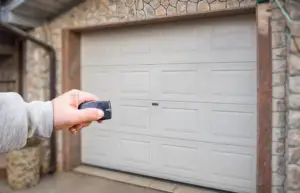
Sometimes, though it is less common than a sensor or spring issue. A remote stuck under a car seat, a wall button pressed by something leaning on it, or a low keypad battery can all trigger the opener without anyone meaning to. Older openers without rolling-code technology can also occasionally pick up a neighbor’s identical remote frequency.
If your opener connects to an app like myQ, check the activity log first. It timestamps every open and close event and usually shows whether a real command triggered it. If reprogramming the remotes, replacing the keypad battery, and checking the app log does not stop it, the issue is more likely inside the opener’s circuit board, which is a job for a garage door opener installation and repair visit rather than more trial and error at home.
Why Does This Happen More at Night or When the Weather Changes?
Temperature swings are a real factor, and it is not your imagination if this happens more overnight or after a hot day cools off. The metal contacts in an opener’s circuit board and the brackets holding the safety sensors expand and contract with temperature, enough to misalign a sensor or trip a marginal connection once things cool down.
Las Vegas summers push this to the extreme, with intense daytime heat followed by a sharp overnight drop. If your door has started acting up mainly after dark or during seasonal transitions, note the pattern. It is useful information for whoever diagnoses it.
Quick Diagnostic Checklist
| What You're Seeing | Likely Cause | What to Check First |
|---|---|---|
| Door reverses partway or won't close at all | Safety sensor blocked, misaligned, or dirty | Clear the area around both sensor brackets and wipe the lenses |
| Door drifts open on its own, or the opener strains and groans | Worn or unbalanced spring | Look for a crooked door, uneven movement, or a visible gap in the spring coil |
| Door opens or closes with no one near a remote | Stuck button, low keypad battery, or signal interference | Check for a remote pinned under something and replace the keypad battery |
| Mostly happens overnight or after a big temperature swing | Circuit board or sensor sensitivity to heat and cold | Note the time of day and outside temperature when it happens |
When Should I Call a Professional Instead of Troubleshooting Further?
Call as soon as the door moves without you commanding it, especially if cleaning the sensors or replacing a battery does not stop it. A door that opens on its own is a security gap, and one that closes unexpectedly on a car, a pet, or a person is a genuine injury risk, usually meaning the safety reversal system itself is not working.
Our licensed technicians can pinpoint whether the fix is a sensor adjustment, a spring replacement, or an opener repair, usually in one visit. A yearly garage door lube and tune also catches a misaligned sensor or a spring nearing the end of its life before it starts acting up unpredictably.
Frequently Asked Questions
Yes. A door that opens on its own leaves your home and vehicle exposed. A door that closes unexpectedly can strike a person, a pet, or a car, and it usually points to a safety sensor or auto-reverse system that is not working correctly. Either way, it is worth a same-day look rather than waiting to see if it happens again.
Yes, unplugging the opener at the wall outlet, or pulling the manual release cord, will stop the door from moving until it is repaired. That makes it a reasonable stopgap if you need the door to stay put overnight, but it is not a fix. Leave it unplugged and call for a diagnosis rather than plugging it back in and hoping the problem does not repeat.
Sometimes. If a stuck button, a weak keypad battery, or a signal conflict is the cause, reprogramming or replacing the batteries often solves it. If the door keeps acting up after that, the issue is more likely inside the opener itself and worth a professional look rather than repeated reprogramming attempts.
Yes. A garage door that has opened or closed on its own even once, then seemed to stop, is often an early warning rather than a resolved problem. Sensors that misfire intermittently and springs that are nearing the end of their life both tend to act up occasionally before failing outright.
Yes, more often than most homeowners expect. A brief power flicker or surge, common during Las Vegas monsoon season, can scramble an opener’s circuit board or send it a false command. If your door acted up around the same time as a storm or an outage nearby, mention that when you call. It points the diagnosis toward the opener rather than the sensors or springs.
Don't Wait for It to Happen at the Worst Time
A garage door that moves on its own will not fix itself, and it will not always misbehave at a convenient hour. Call All Garage Door Pros at (702) 846-0884 for a same-day diagnosis, or schedule a garage door repair visit online. Our licensed technicians (Nevada Contractors License #0088549) will find the exact cause, whether it’s the sensors, the springs, or the opener, and in most cases fix it during the same visit.
The All Garage Door Pros Team | Licensed Nevada garage door technicians, Contractor License #0088549 | Published September 11, 2026